
We Used AI to Plan Spring Break — Here's What Actually Happened
Five experiments, one supply box, and the moments that surprised us most

Spring break is over. If you’re reading this, you probably survived it too.
Whether your kids were home all week, you were juggling work calls between activities, or you spent half the week wondering if you’d planned enough (or too much), I see you. Having kids home for a full week while life keeps going is no small thing.
Last week, I shared how my kids and I sat down together with AI and planned an entire week of STEM experiments before spring break started. We used one prompt, refined it five times, and walked away with five days of activities, a Sunday supply list, and a daily morning prep plan. If you missed it, head over to How We Used AI to Plan a Week of Spring Break STEM Activities for Kids.
This week, I want to tell you what actually happened. Because planning is one thing. Executing with real kids, real messes, and real mornings is something else entirely.
By the end of this post, you’ll have:
A real look at what worked (and what didn’t) when we followed AI’s plan for a week of STEM activities
Proof that AI can take the mental load off activity planning without taking the fun out
Three moments where my kids caught AI being wrong, and why that was the best part
Ideas for how structure from AI can actually spark creativity in your kids
Confidence that using AI with your kids is one of the best ways to introduce them to it
Sunday Night: Everything in a Box
Here’s what made this whole week possible: on Sunday, I gathered every supply we needed for all five experiments and put them in one box.
That’s it. One box.
AI had given us a Sunday prep checklist that totalled up everything we needed across the week. So instead of reading through five different experiment instructions and mentally tracking what we needed, I had one list. I grabbed what we already had at home, picked up a few things, and packed it all into a box that sat on the kitchen counter.
Then each morning, I had a separate list of what to pull out of the box and lay on the kitchen table for that day’s activity. I could do it while drinking my coffee in about five minutes. By the time the kids came down, everything was ready to go. No scrambling, no “hold on, I need to find the vinegar,” no running around the house ten minutes before the activity trying to gather supplies while already feeling burned out.
That setup is what kept my mental energy in check all week. It kept my emotions in check too. And honestly, it’s what made this week not just possible, but genuinely fun for me.
Monday: Colorful Butterflies and a Calm Start
Our first experiment was Colorful Biology, where the kids colored coffee filters with markers, dipped them into water, and watched the colors spread and blend. Simple, beautiful, and the perfect way to start the week.
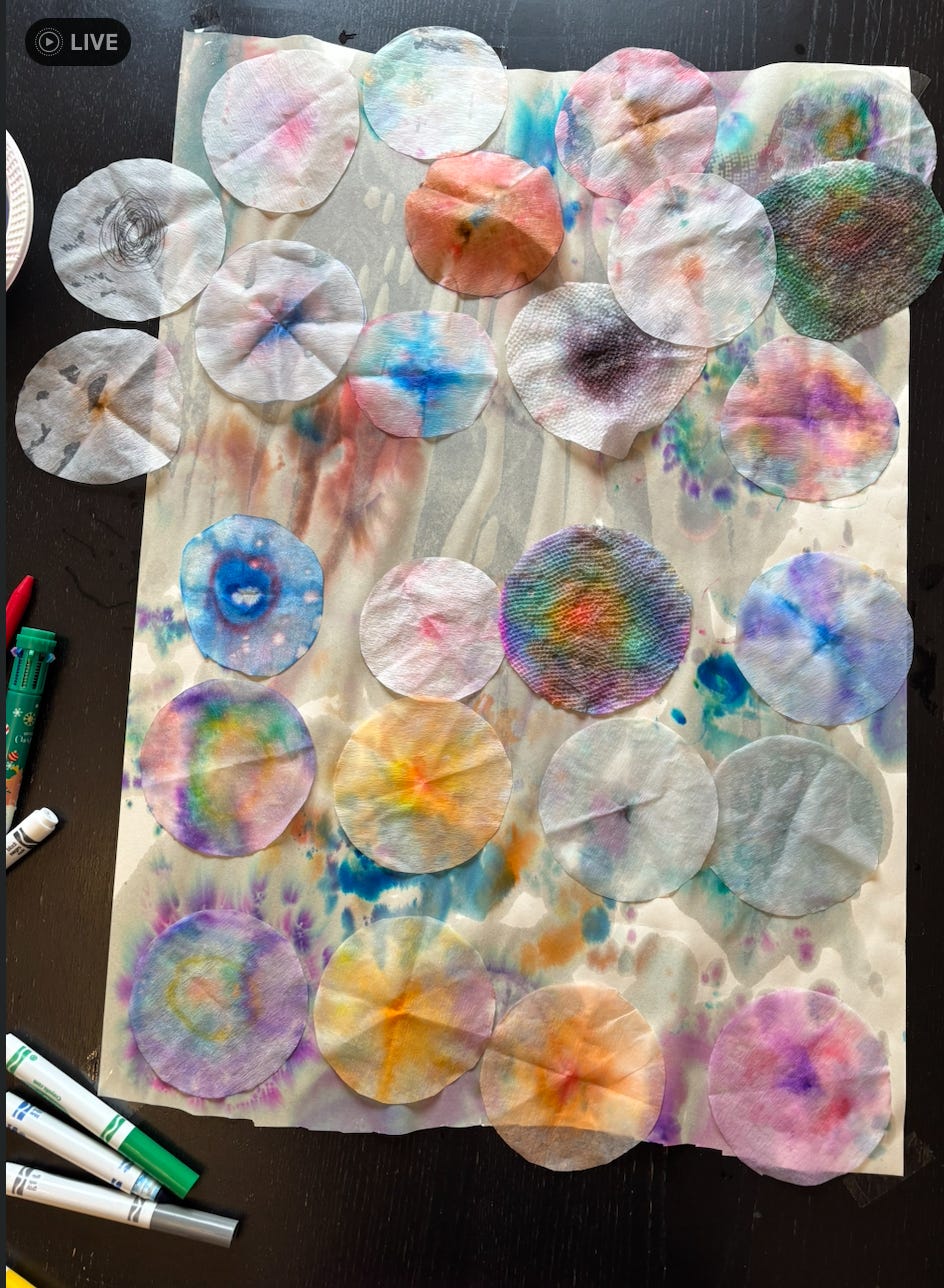
What I noticed most about Monday wasn’t the experiment itself. It was how I felt. I wasn’t stressed or rushing. I walked over to the kitchen table with the kids and everything was there. That feeling alone told me this AI-planned week was going to work.
When AI Missed a Step (and My Kids Caught It)
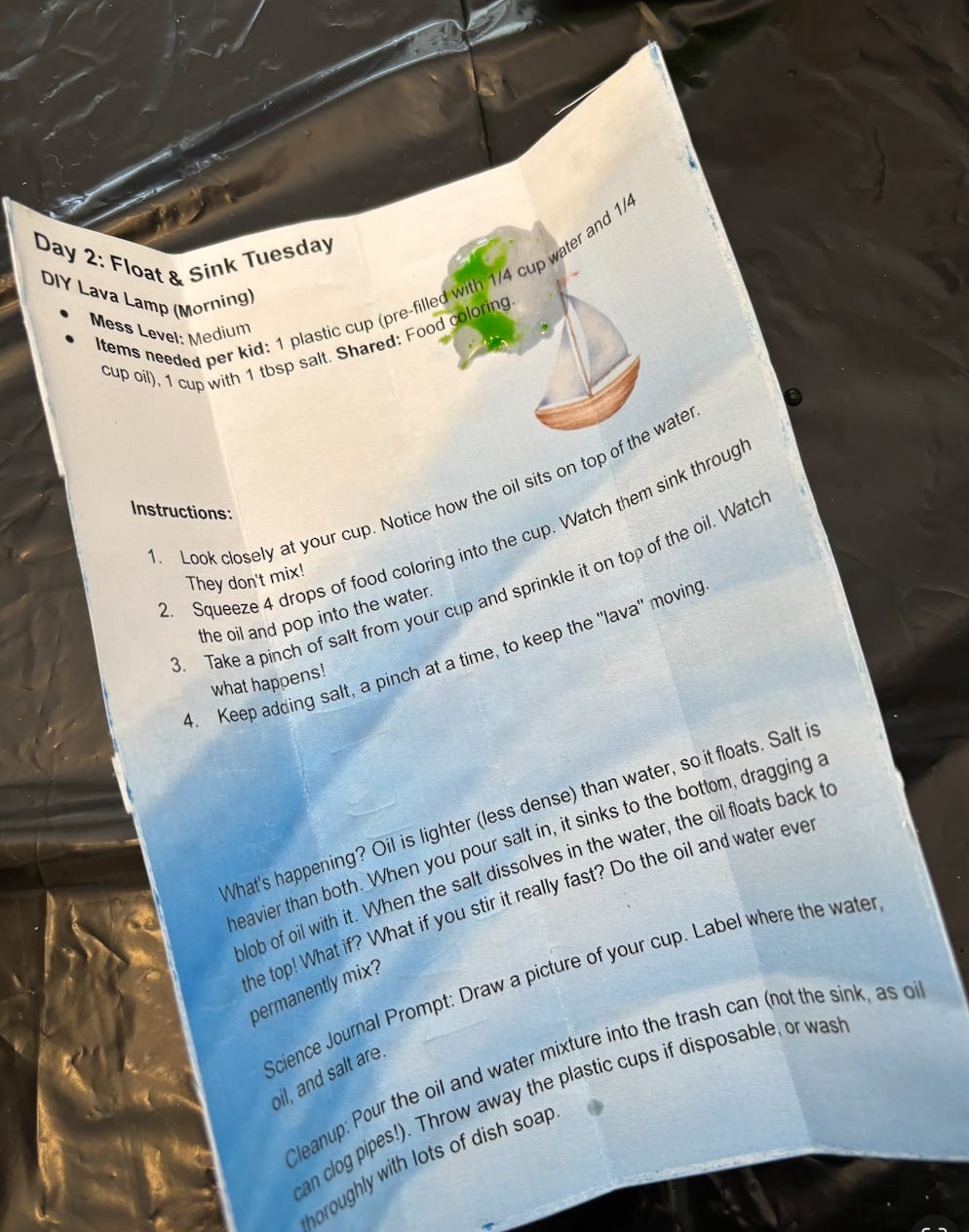
Tuesday was a float and sink experiment with oil and water. The activity itself was straightforward, but something interesting happened when the kids read through AI’s instructions.
The very first step said something like, “Look in your cup and notice how the oil sits on top of the water.”
Both my kids stopped and looked at each other. Wait, what cup? AI never told us to put the oil and water in the same cup. It just assumed we’d figure that out. It skipped a step entirely.
My kids thought this was hilarious. They joked, “We need to use our human brain!” And they were right. AI gave us a solid starting point, but it missed something that any human reading those instructions would catch. We had to think critically, fill in the gap ourselves, and figure out what AI meant.

I didn’t turn this into a lecture. I didn’t sit them down and say, “Now kids, let’s discuss AI limitations.” It just happened naturally, in the middle of a fun experiment, with oil and water on the table. That’s exactly the kind of AI conversation I want to have with my kids.
This is what the LEAD framework’s “Always Verify” looks like in real life. I wrote about the LEAD mindset a few weeks ago in 49% of Parents Haven’t Talked to Their Kids About AI: The LEAD Framework Fixes That. You don’t need to be an AI expert to guide your kids. You just need to be present, curious, and willing to check the work together.
The Balloon That Made Everyone’s Eyes Light Up
Wednesday was the one that made me remember exactly why I love doing activities with my kids.
We filled a balloon with baking soda, poured vinegar into a water bottle, stretched the balloon over the top, and then flipped the balloon up so the baking soda dropped into the vinegar. The gas from the chemical reaction started inflating the balloon right there on the bottle.
The look on my 7-year-old’s face when that balloon started growing. Pure wonder, eyes wide, mouth open, just watching this balloon slowly expand. Both kids were smiling with excitement.
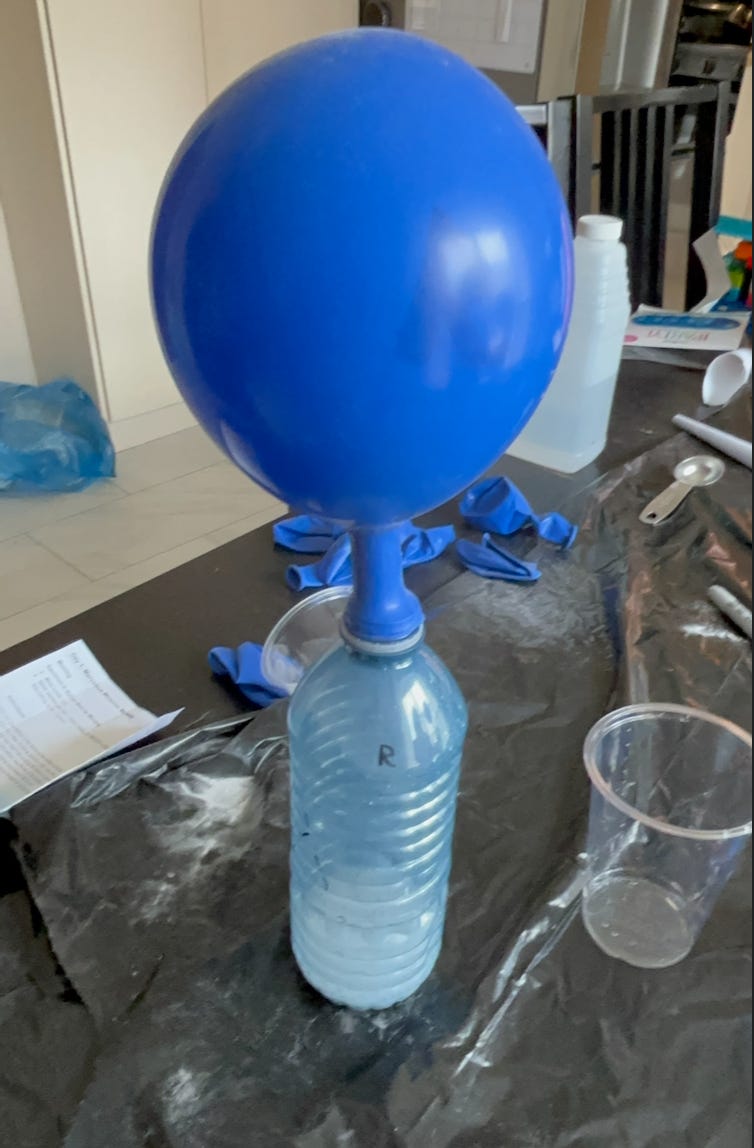
That moment right there is why I enjoyed planning activities like this for my kids. The win: AI made the planning easier, so I could actually be present for it.
When AI’s Instructions Fell Short — And We Figured It Out Together
Wednesday was all about Engineering, and the instructions for this one weren’t great. AI gave us the general idea, but the steps weren’t clear enough to actually build popsicle stick catapult without some trial and error.
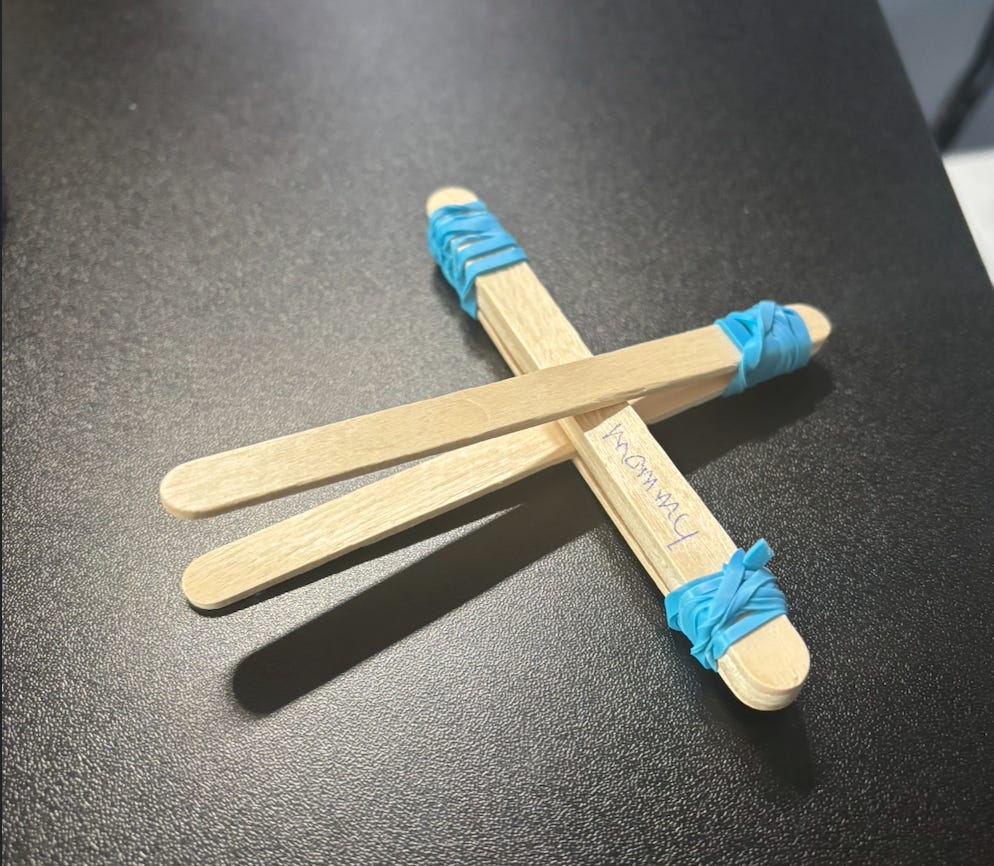
We stayed the course and figured it out. The kids and I worked through it together, tried a few approaches, and eventually got our catapult working. It was another chance to talk about how AI doesn’t always explain things perfectly, and that’s okay. Sometimes you have to be creative and problem-solve your way through it.
Friday: The Ooblock Mess (and the Slime They’d Been Waiting For)
All week, my kids had been counting down to Friday’s experiment: Ooblock. In last week’s post, I mentioned my kids were nuts about slime and couldn’t wait for this one.
Ooblock is corn starch, food coloring, and water mixed together. And let me tell you, it got messy fast.
But my daughter loved it the most. She started making structures out of the Ooblock, molding it into different shapes and building things. What started as a simple science experiment turned into a full creative session. She was at that table for a while, just building and experimenting with the texture.
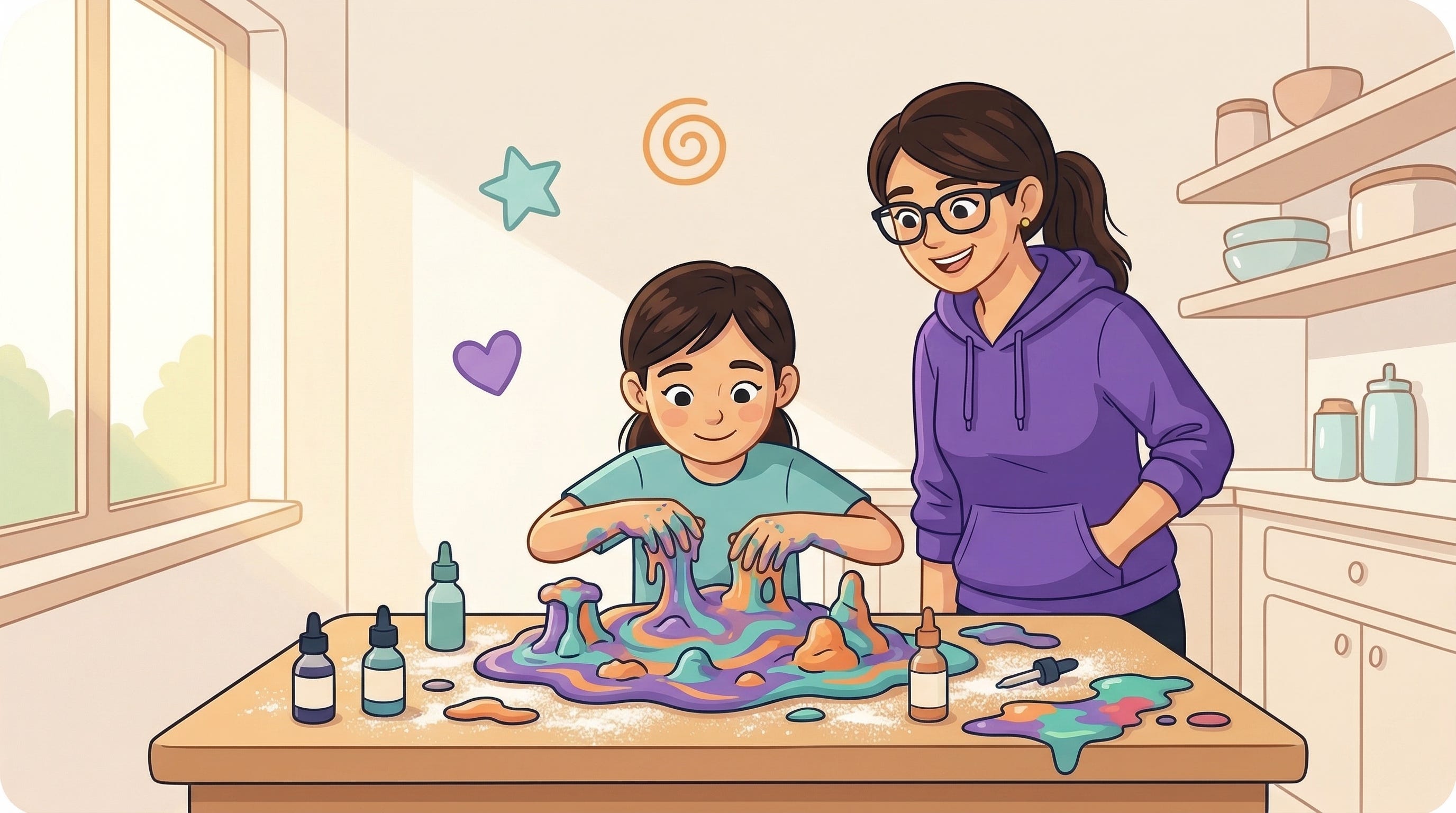
It was the perfect way to end the week. Messy, creative, and exactly the kind of play I want for my kids.
The Creativity That Surprised Me Most
If you asked me before this week whether using AI to plan activities would make things feel too structured or rigid, I wouldn’t have known what to say. That was a concern in the back of my mind.
It turned out to be the opposite.
My daughter took the AI-generated instructions and turned each day into these beautiful single-page instruction cards. She put them up on our fridge as a calendar, with each day’s card pinned to it. She took something structured and made it her own. That initiative, that creativity, came entirely from her.
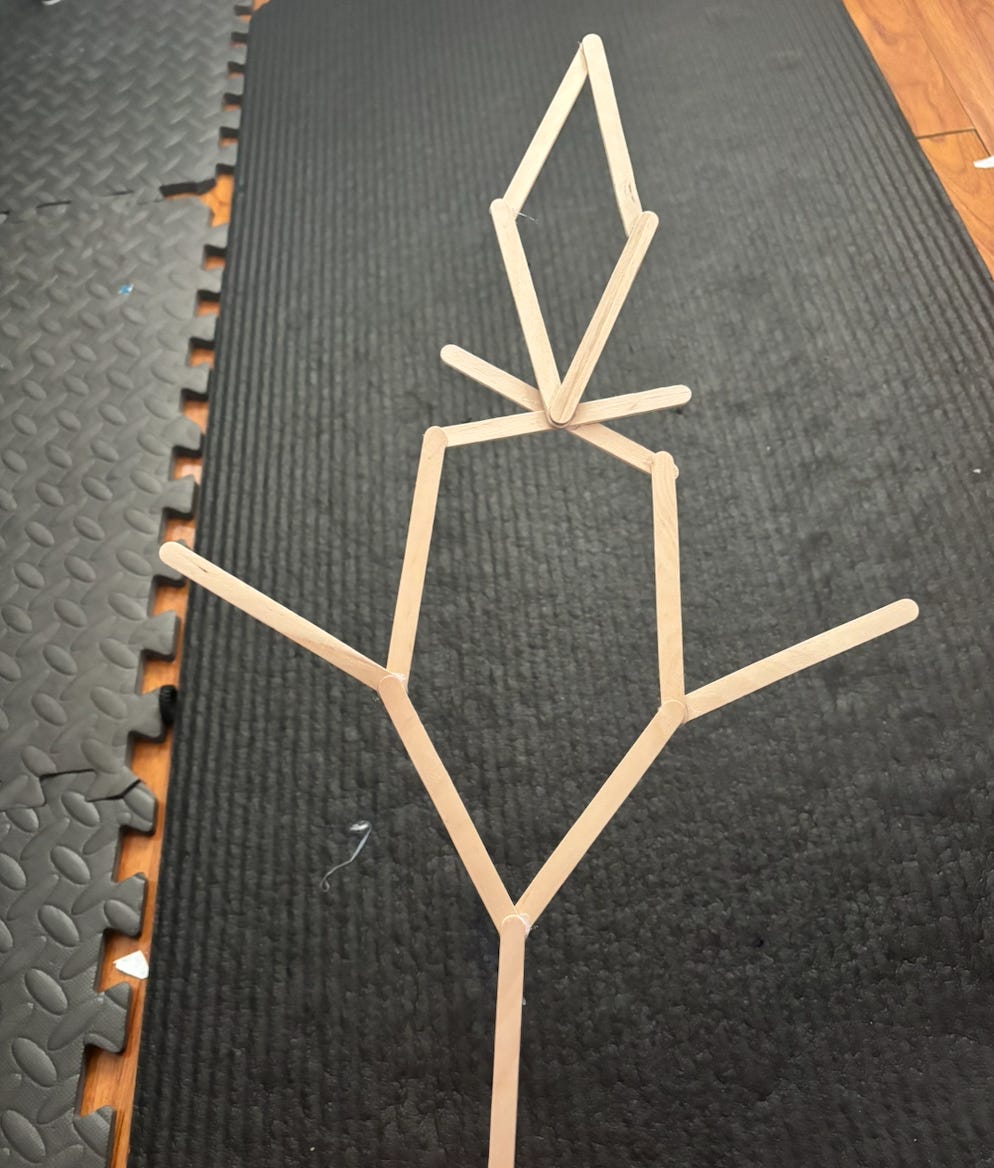
The creativity didn’t stop there. Every time we finished an experiment, there were leftover supplies: popsicle sticks, rubber bands, baking soda, corn starch. Each kid would grab the extras and start building their own creations. My son built what he called “the four-point shooter” out of leftover popsicle sticks and glue. My daughter mixed leftover corn starch and water and molded it into all sorts of things.
I recently came across a post from The Art of Play on Substack about how you teach creativity, and it really resonated with what I saw this week. You don’t teach creativity by giving kids a blank page and saying “be creative.” You give them a starting point, some structure, some materials, and then you step back. That’s exactly what happened here. AI gave us the structure, but the creativity came from the kids.
What My Kids Actually Thought
I sat down with both kids after the week and asked them about the experience. Here’s what they said, in their own words.
My eldest said her favorite activity was Monday’s coffee filter butterflies (”Colourful Biology”). When I asked how she felt AI did with the instructions, she said plainly: “It was missing some part and she had to problem solve to figure out things on her own.” She also mentioned the slingshot she built from leftover supplies. And when I asked if we should do this again, she didn’t hesitate: “YES!”
My youngest could barely contain his excitement talking about the balloon experiment. He walked me through the entire process, describing how we put stuff in the bottle, stuck the balloon on top, flipped it over, and watched it grow. That was his clear favorite. His second favorite was the Ooblock, and he ranked all five experiments, making sure I knew he liked every single one.
What struck me most is how natural the whole conversation felt. They weren’t talking about AI. They were talking about the experiments, the fun, the things they built. AI was just the tool that made it happen, and it faded into the background exactly the way it should.
Why Using AI With Your Kids Is the Best Way to Teach Them
There’s a lot of conversation right now about building with AI in public. People share their vibe coding sessions, their AI-powered workflows, how they’re using AI to move faster at work.
What I’m doing is a little different. I’m using AI with my kids, in public.
And here’s what this week made clear: the best way to teach your kids about AI isn’t a sit-down lecture. It isn’t showing them a demo. It isn’t handing them a tablet and saying “try ChatGPT.”
It’s using AI together for something fun, and then being present when the teachable moments show up on their own.
This week, my kids learned that AI can miss steps, that instructions aren’t always perfect, that you still need your own brain to fill in the gaps. They learned all of this while painting butterflies, inflating balloons, and getting their hands covered in Ooblock. Not a single part of it felt like a lesson.
If you’re a parent wondering how to introduce your kids to AI, try this: use it with them to plan something they’re excited about. It could be activities, a recipe, a weekend project. Sit together, talk through the prompt, and then actually do the thing. The AI conversation will happen naturally.
Wrapping Up
This week reminded me that AI isn’t just about productivity or saving time, although it absolutely did both. It’s about creating space. Space to be present with my kids instead of stressed about logistics. Space for them to be creative with the materials in front of them. Space for real conversations about AI to happen without anyone feeling like they’re being taught.
If you tried the prompt from last week, I’d love to hear how your spring break went. Drop a comment or hit reply. Tell me what experiments your kids loved, what went sideways, and whether you’d do it again.
And if you found this useful, tapping the like button really does help other parents find this community. Thank you so much for reading. I know how busy spring break recovery is, and the fact that you made it to the end means a lot.
- Manisha 💛
Thanks for reading AI Family Network Newsletter! This post is public so feel free to share it.
About the Author
Hey, I’m Manisha. I’m a parent, a lifelong learner, and someone who spends a lot of time thinking about how AI and tech shows up in our homes. I work with AI and automation professionally, but at home I’m navigating the same questions you probably are:
What is ChatGPT?
Can I use ChatGPT for my homework?
How about Gemini?
AI Family Network is where I share what I’m learning as I explore AI and tech with my own family. I’m not here as an expert with all the answers. I’m here as a parent figuring it out in real time, just like you.
A Quick Note
Everything I share here comes from my personal experience using AI with my family. It’s meant to inform and educate, not to replace professional, medical, legal, or educational advice. What works in my home may not be right for yours. AI tools change fast. School policies vary. Every family is different. So please, review tools yourself. Trust your instincts. And loop in the other trusted adults and educators in your life when you’re making decisions. You know your family best.
Thank you for sharing the results! Those were all great projects, and it sounds like your kids had lots of fun! (I’m going to steal the balloon idea..)
This sounds like so much fun!!!🩷🦩